
Public Safety Drones for First Responders: Faster, Smarter, Safer Operations
The emergency response system requires immediate action during emergency situations. First responders don’t always know what they’re walking into. A building fire. A missing person in the woods. A major crash is blocking a highway. The speed of acquiring correct information proves crucial for achieving successful results.
Drones are currently transforming various industries through their innovative technological applications. Today, more agencies are realizing how valuable drones and public safety can be when working together. A drone can launch in minutes, give responders a clear view of the situation, and help teams make smarter decisions before anyone steps into danger. The system depends on basic technology, which performs essential functions.
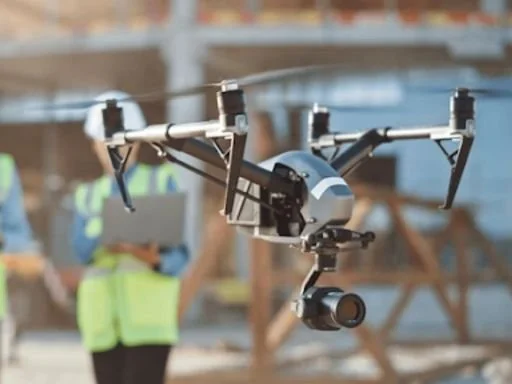
How a Public Safety Drone Helps Teams See the Full Picture
A public safety droneprovides an additional aerial observation capability.
First responders need to wait for complete information before they can proceed to the scene. The team obtains a real-time aerial observation of current events within two minutes. The aerial view provides them with vital information about the site layout, while they can identify danger zones and determine their safest movement routes.
Think about a house fire. Smoke everywhere. Visibility is terrible. A drone flying above the structure can quickly show where the fire is spreading and where crews should focus. That kind of information saves time and sometimes lives.
Why More Agencies Are Using Public Safety Drones
There’s a reason so many departments are starting to invest in public safety drones. They solve real problems.
For one, drones can reach places people can’t. Thick forests, rough terrain, damaged buildings after a storm, these are all situations where sending a person in immediately can be risky.
Drones also launch quickly. No waiting for helicopters or special teams. Just power up, send it up, and start gathering information. For smaller cities and counties, that speed and flexibility make a big difference.
And honestly, they’re far more affordable than traditional aerial resources.
Need faster aerial support?
Where Drones in Public Safety Make the Biggest Impact
The role of drones in public safety keeps growing as departments find new ways to use them in the field. The most significant example of this technology exists in search and rescue operations. A drone can search extensive areas more efficiently than ground teams alone when someone needs to be found.
They’re also used during:
Fire response to monitor flames and hotspots
Disaster recovery after storms or floods
Traffic accidents to quickly map the scene
Large public events for crowd monitoring
The big benefit is simple. Commanders get a real-time aerial view of what’s happening instead of relying on guesswork.
What Makes the Best Public Safety Drone
Emergency work requires specific drone equipment, which does not apply to all drones. The best public safety drone is one that meet their essential requirements.
Thermal cameras serve as a major requirement because they allow users to find people during nighttime and smoke-filled conditions. Strong flight stability serves as an essential requirement for pilots to operate their aircraft during windy weather conditions. Police agencies need to protect their sensitive information through data security measures because they handle delicate situations.
Battery life, camera clarity, and software reliability all play important roles in determining device performance. A drone that fails mid-mission creates more than operational problems because it delays the progress of emergency response teams.
Why Drones for Public Safety Are Becoming Standard
More departments are realizing that drones for public safety aren’t just a cool tech upgrade. They’re becoming a practical tool that improves how teams operate.
Instead of sending responders into uncertain situations, drones help gather the information first. That means better planning, safer operations, and faster response times overall.
And when emergencies happen every day, those small improvements really add up.
How Cleartopia Solutions Helps First Responders
At Cleartopia Solutions, we spend a lot of time working with agencies that are trying to build reliable drone programs. Some are just getting started. Others want to improve the systems they already have.
Our team provides complete support, which includes equipment selection, mapping tool installation, and operator training. The goal is simple, help departments use drone technology in a way that actually supports their real-world missions.
The technology becomes important for first responders when it improves their ability to perform their work duties.
Conclusion
Emergency response will always involve uncertainty. But better tools make those situations easier to manage. As more departments adopt aerial technology, the connection between drones and public safety will only keep getting stronger. Faster information. Better visibility. Safer operations. For first responders, that’s a big step forward.
Ready to start your drone program?
FAQs
1. What does Cleartopia Solutions offer to the public safety drone programs?
Cleartopia Solutions assists the agencies in designing and implementing public safety drone programs, which in actual conditions work. We help with the choice of equipment, the construction of functioning processes, and training teams to work with drones successfully. The idea is to make first responders have a quicker aerial perspective and enhance safety and decision-making processes in the case of an emergency.
2. What is the meaning behind the drones becoming valuable tools to first responders?
Drones provide emergency responders with immediate aerial access to the disaster site. Teams do not need to walk into any situation they have no idea of, but rather deploy a drone and learn within a few seconds of what is going on. This assists them in detecting the dangers, finding victims more quickly, and devising safer means of responding to them prior to exposing them to dangerous circumstances.
3. Could drones be useful when searching and rescuing?
Yes, drones would be of great use in search and rescue. They are capable of covering a long distance within a shorter time and can deliver live video to command teams. Most drones also have thermal cameras that are able to see body heat during low visibility, particularly at night, hence missing persons can easily be located.
4. Are drone programs costly to the agencies in charge of law enforcement?
Drones are a lot cheaper than helicopters or other air systems. It is common to find that many departments begin with a modest set-up and grow with time. Drones can be provided with the proper training and gear to provide robust operational capacity without inducing significant financial strains on agencies.
